


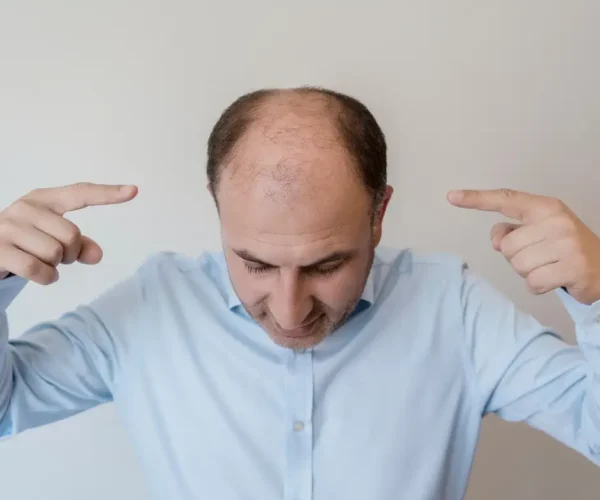
Understanding male pattern baldness stages is essential if you want to slow hair loss, maintain healthy follicles, or explore effective treatments early. Male pattern baldness is progressive, meaning it worsens over time without intervention.
In this guide, we’ll explain the male pattern baldness stages, genetics, age of onset, and whether reversal is possible — naturally or clinically.
What Are Male Pattern Baldness Stages?
Male pattern baldness stages describe the predictable progression of hair loss caused by androgenetic alopecia. These stages help doctors assess severity and recommend appropriate treatment options.
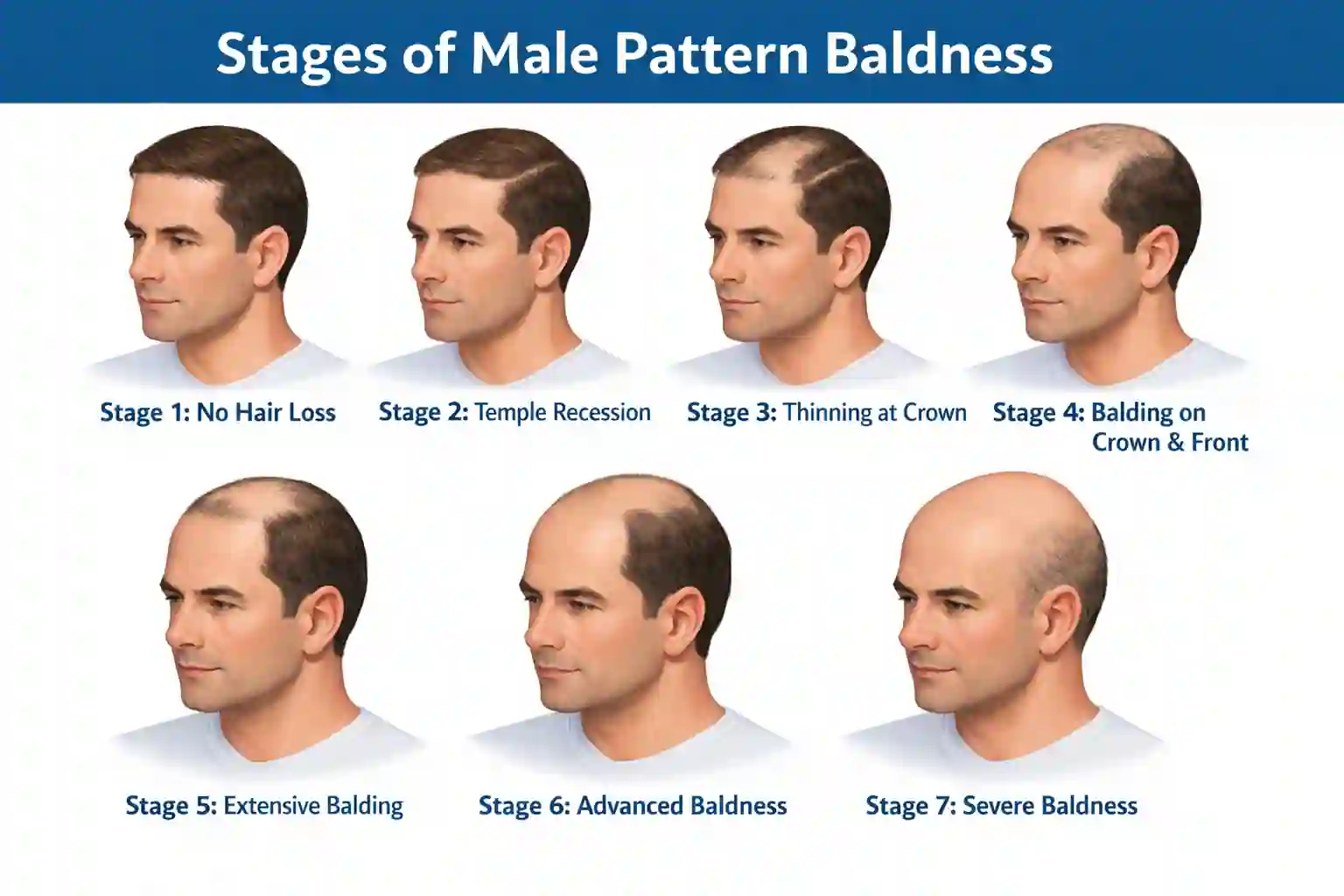
The progression is commonly measured using the male pattern baldness scale, also known as the Norwood-Hamilton Scale.
The Male Pattern Baldness Scale Explained
The male pattern baldness scale categorizes hair loss into seven stages. Each stage represents a different pattern and level of hair thinning.
- Stage 1: No significant hair loss or recession
- Stage 2: Mild recession at the temples
- Stage 3: Deepening temple recession or early crown thinning
- Stage 4: Noticeable hair loss at crown and frontal scalp
- Stage 5: Larger bald areas with minimal separation
- Stage 6: Crown and frontal areas merge
- Stage 7: Severe hair loss with only a thin band remaining
Identifying your position within the male pattern baldness stages early can dramatically
improve treatment outcomes.
At What Age Does Male Pattern Baldness Start?
A common concern is: at what age does male pattern baldness start? For many men, early signs appear in their late teens or early 20s. However, most notice visible hair loss between ages 30 and 50.
Age of onset largely depends on male pattern baldness genetics. If close relatives experienced early hair loss, chances are higher that it will start sooner.
Male Pattern Baldness Genetics and Hormonal Factors
Male pattern baldness genetics determine how sensitive your hair follicles are to dihydrotestosterone (DHT), a hormone derived from testosterone.
DHT shrinks hair follicles over time, shortening the growth cycle and leading to thinner, weaker hair — a defining feature across all male pattern baldness stages.
Can Male Pattern Baldness Go Back?
Many people ask: can male pattern baldness go back? The answer depends on the stage of hair loss.
In early male pattern baldness stages, follicles are still alive and capable of producing hair. Once follicles become inactive, regrowth becomes difficult without medical treatment.
How to Reverse Male Pattern Baldness Naturally?
If you’re wondering how to reverse male pattern baldness naturally?, it’s important to set realistic expectations. There is no guaranteed natural male pattern baldness cure, but some methods may slow progression.
- Regular scalp massage to increase blood flow
- Balanced diet rich in protein, iron, and zinc
- Stress management and proper sleep
- Natural oils like rosemary or pumpkin seed oil
Natural approaches are most effective during early male pattern baldness stages and work best when combined with professional treatments.
Is There a Permanent Male Pattern Baldness Cure?
Currently, there is no universal male pattern baldness cure. However, advanced medical treatments can slow hair loss, stimulate regrowth, and improve follicle health.
According to the
American Academy of Dermatology, early treatment provides the best chance of preserving existing hair.
When to Seek Professional Treatment for Male Pattern Baldness
If your hair loss continues to progress despite lifestyle changes, professional treatment may be the most effective option. Clinical solutions are designed to target the root causes behind male pattern baldness stages.
At Parpar Medical Spa, we offer advanced hair restoration treatments customized to your stage of hair loss and genetic profile.
Explore our hair restoration services →